Natuur & Ruimte chooses the Limach E27.3 to combat Japanese knotweed

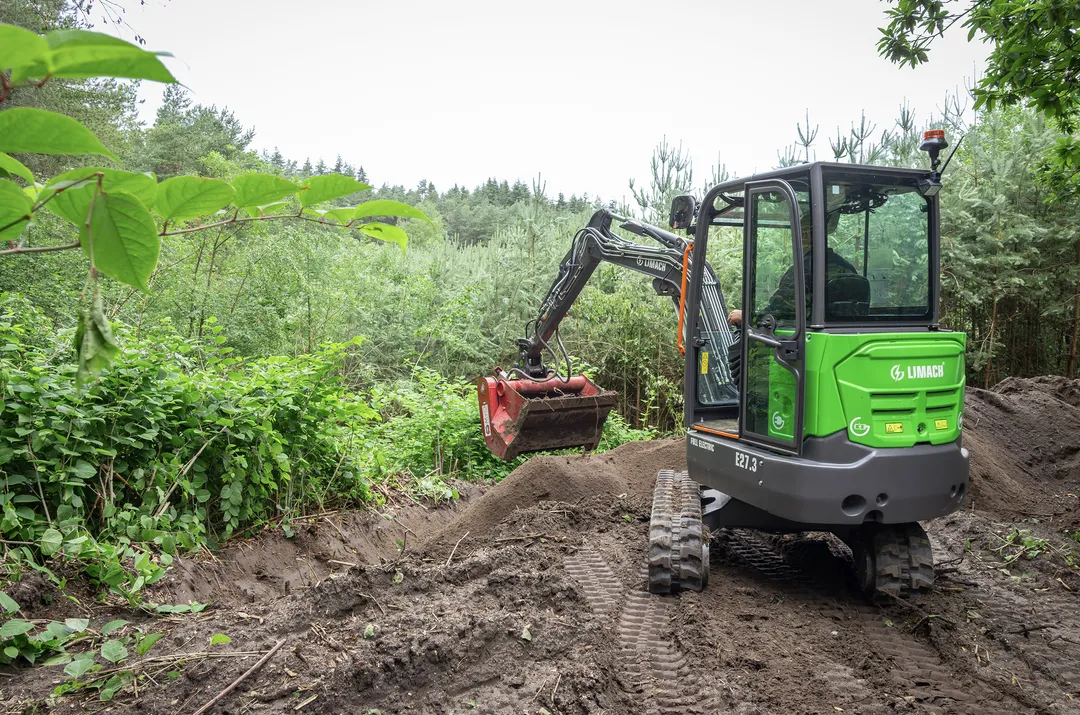
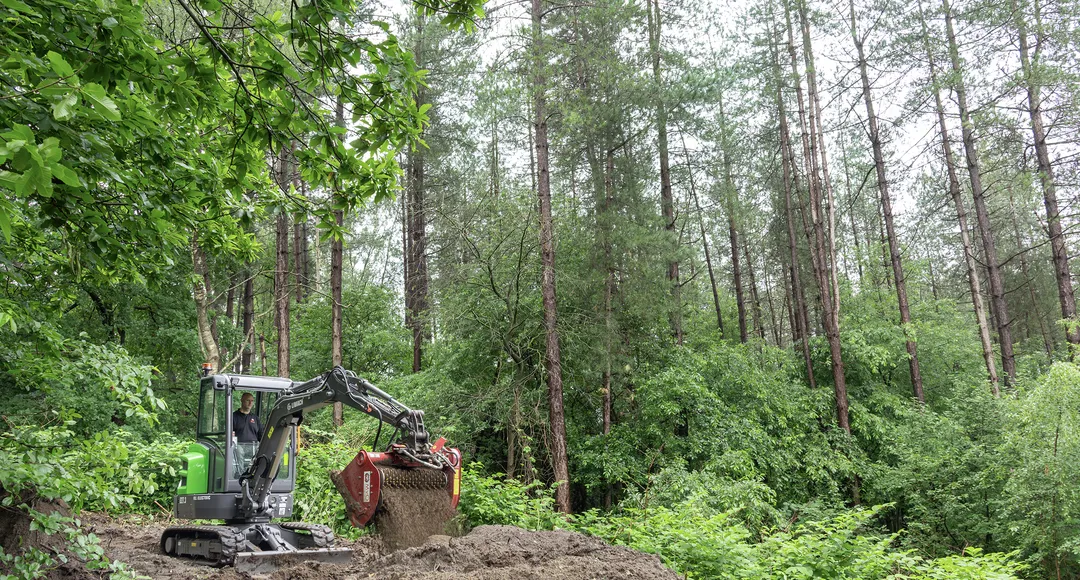
At Donderstein Estate in Leersum, we meet Theo Portegijs from Natuur & Ruimte while he is tackling Japanese knotweed. This invasive species rapidly spreads and outcompetes native plants and trees, gradually taking over entire natural areas.

To remove the plant in a sustainable and effective way, Theo developed his own working method, with the Limach E27.3 playing a central role.

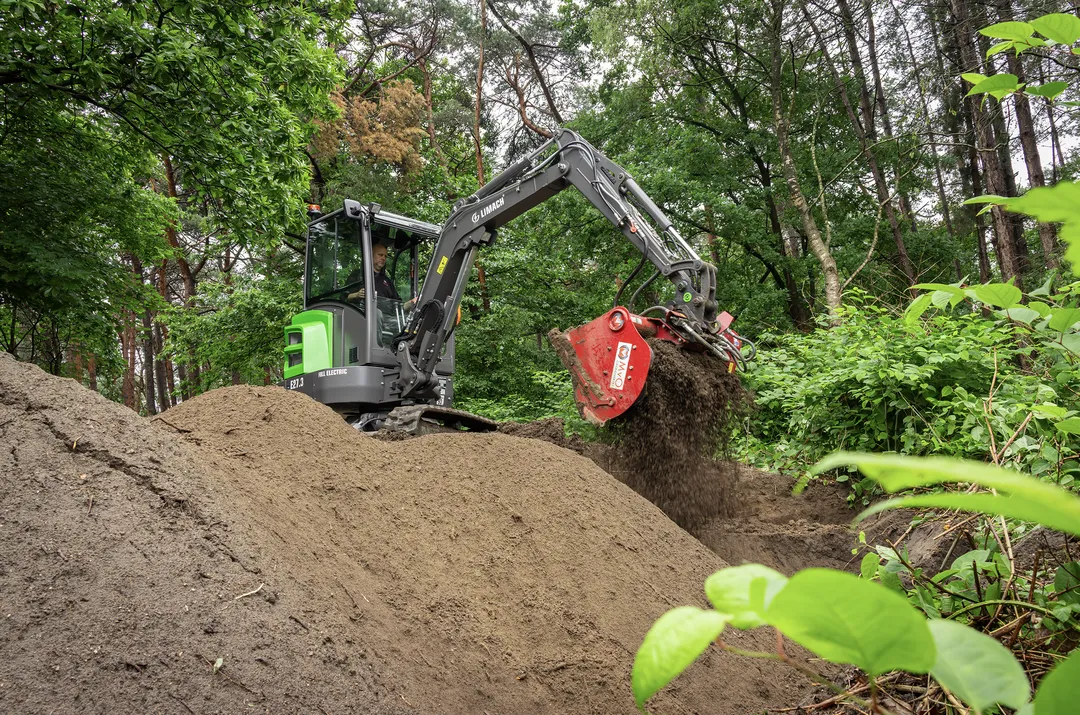
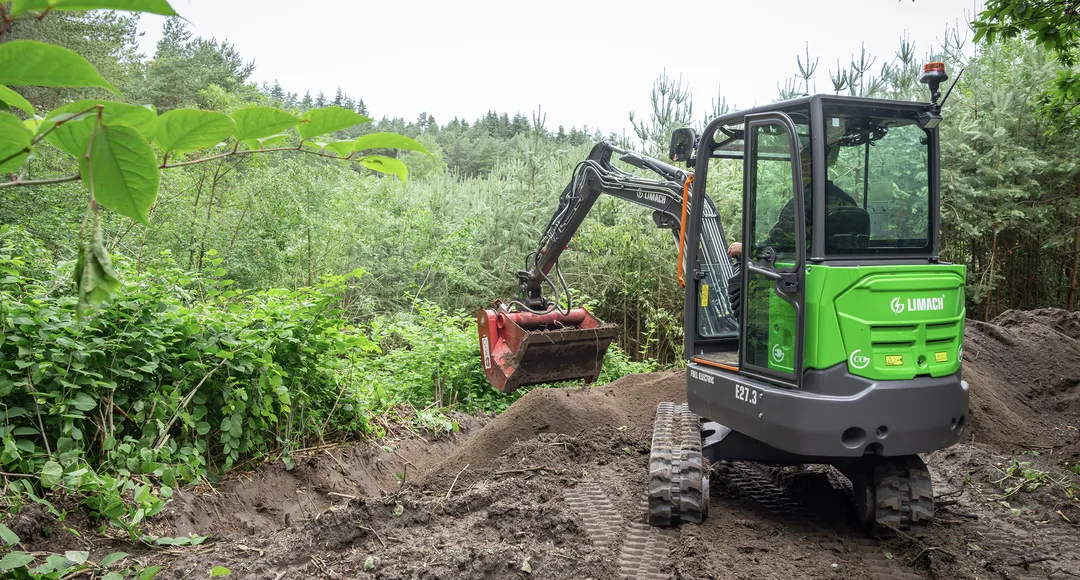
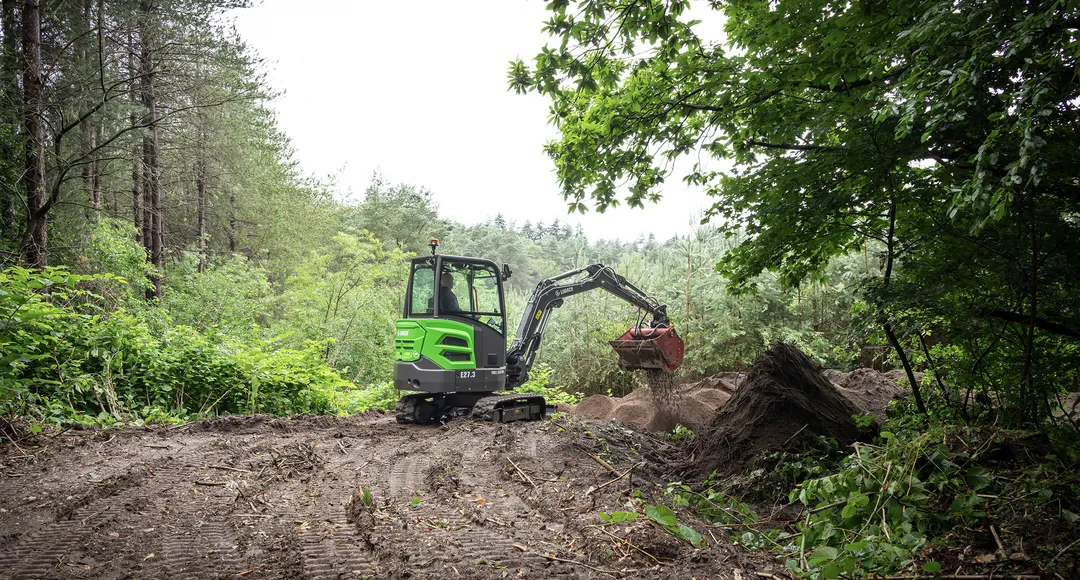
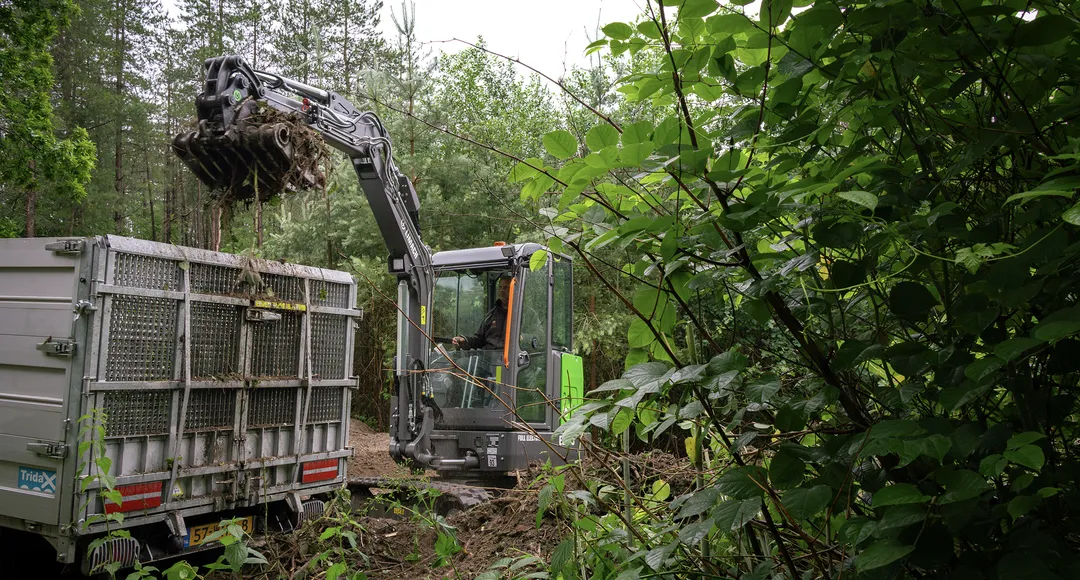
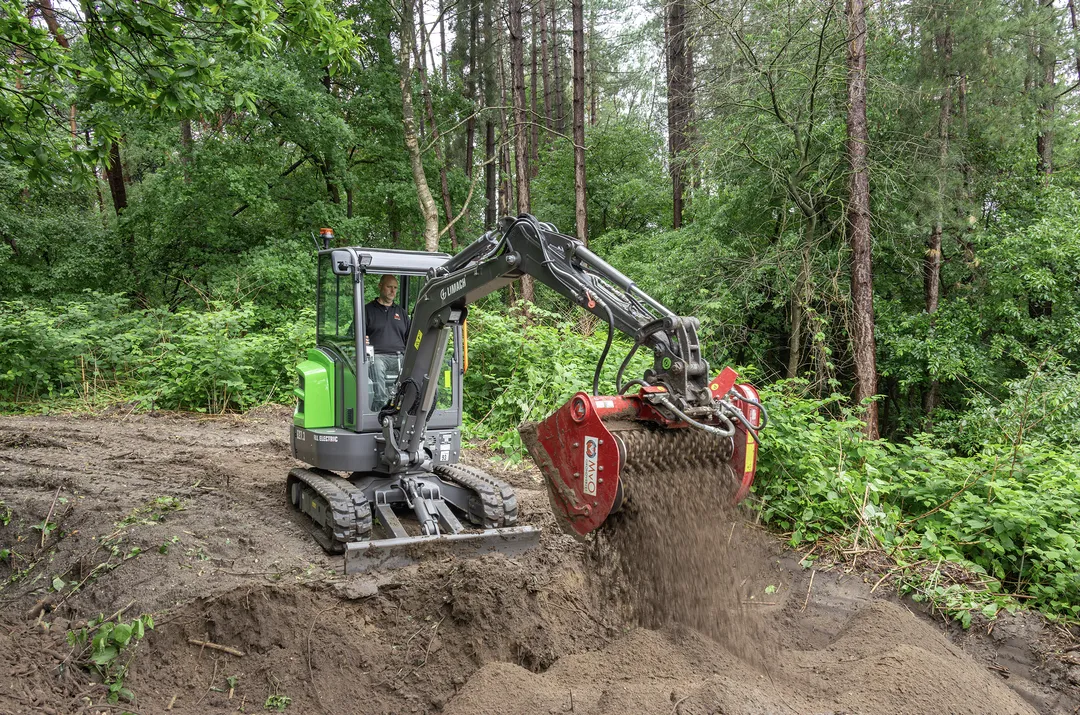
Together with Michael van Ouwerkerk of MVO Grondverzet he demonstrates how the electric excavator is used to remove Japanese knotweed both above and below ground. A perfect example of how zero-emission operation, battery capacity and performance go hand in hand.

E27.3 Natuur en ruimte_4

A persistent problem requires a smart solution
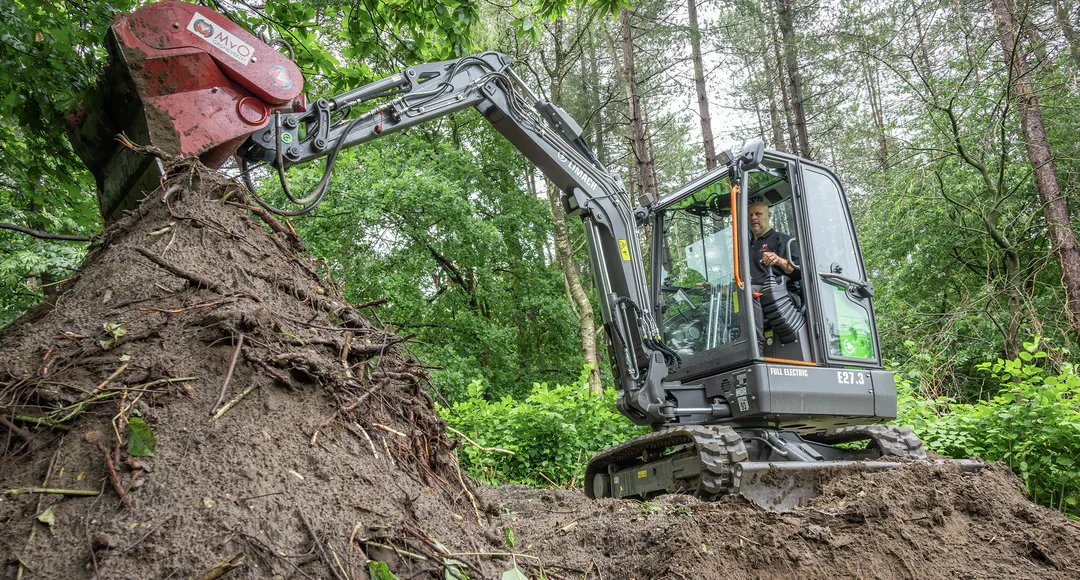
Japanese knotweed is not just visible above ground. In fact, around 90% of the plant lies beneath the surface in an extensive network of rhizomes. "Simply mowing it down doesn't work," Theo explains. "The plant just grows back. That's why we developed our own approach that really works."

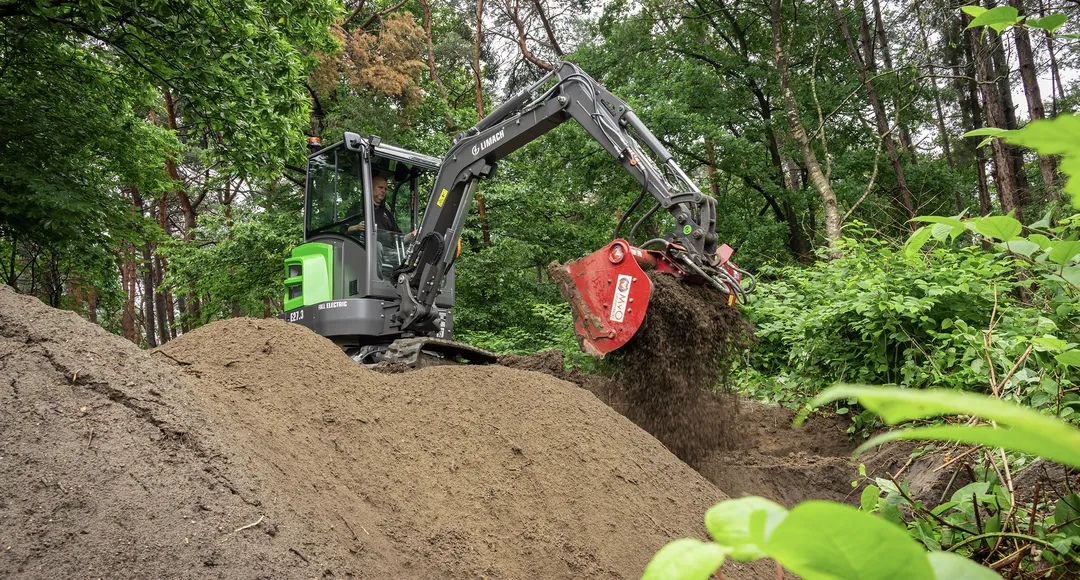
The process starts by removing the stems and surface roots using a root fork. The soil is then carefully screened with a star screening bucket to separate and remove the deeper rhizomes as well.

At Donderstein Estate, that is no easy task. "The soil here was brought in about fifteen years ago," says Theo. "That means we have to dig quite deep to remove all the rhizomes."

Why electric?
For Theo, it quickly became clear that an electric excavator was the best fit for Natuur & Ruimte's work. The company operates daily in sensitive natural areas, where climate, emissions and minimizing environmental impact are key considerations.

"Our clients really appreciate this choice," Theo explains. "We all know we need to do something about the climate, and this is one way we can contribute. By working electrically, we've reduced our COâ‚‚ emissions to less than one kilogram per square meter."

For Natuur & Ruimte, the Limach E27.3 offers exactly the combination of sustainability and performance these demanding applications require. Thanks to its zero-emission drive, low noise levels and powerful performance, the team can carry out their work without compromising on productivity.

E27.3 Natuur en ruimte_2

Why the Limach E27.3?

For Natuur & Ruimte, battery capacity is one of the most important factors. Their work often continues throughout the entire day, so downtime simply isn't an option.

"We first spent a year working with a rental machine," Theo explains. "It quickly became clear that the Limach E27.3 was simply the machine that best suited our work."

Battery capacity proved to be the deciding factor. "Limach offers the largest battery capacity in this class of excavators. We can operate it continuously for at least six hours, and that's essential for us."

Theo laughs as he points to Michael, who continues working without interruption. "Michael is very good at getting the most out of the machine, and he really needs that capacity. If I'm operating it myself, I can't even run the battery empty in eight hours. That's why I'm happy to leave this job to Michael."
More than just the purchase price

Although the purchase price of an electric excavator is higher than that of a comparable diesel machine, Theo looks beyond the initial investment.

"The purchase price is indeed higher," he says. "But fuel and maintenance costs are lower. When you look at the total cost of ownership, the difference isn't that significant after all."

E27.3 Natuur en ruimte_6

Working together towards a sustainable solution

Natuur & Ruimte offers a 10-year guarantee on its Japanese knotweed treatment. The company has also been working closely with Michael of MVO Grondverzet for the past eight years. For this project at Donderstein Estate, a subsidy scheme provided by the Municipality of Utrecht covers the costs, meaning the estate owner does not have to contribute financially.

"Fortunately, we're seeing that more and more municipalities are open to this approach," says Theo. "That allows us to restore natural areas on a larger scale and prevent future problems."

As the Limach E27.3 continues working quietly in the background, it becomes clear that zero-emission operation is about more than sustainability alone. It is a practical solution that helps restore and protect vulnerable natural areas for the future.

Ready to make the switch to zero-emission?

Discover our mini excavators

Limach_E140.1_LR_original_gr

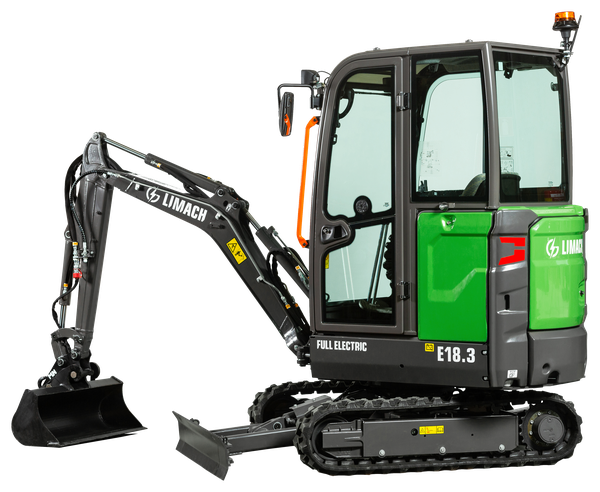
E18.3

Compact & Flexible

The E18.3 is a compact electric mini excavator weighing 1.900 kg, with a digging depth of 2.4 meters. It comes standard with a dozer blade and an extendable undercarriage. Tested as the most productive, efficient, and quiet machine. Available with two battery options. Inquire about the best configuration for your application.

More information

Limach_20.3_02_21_transparant

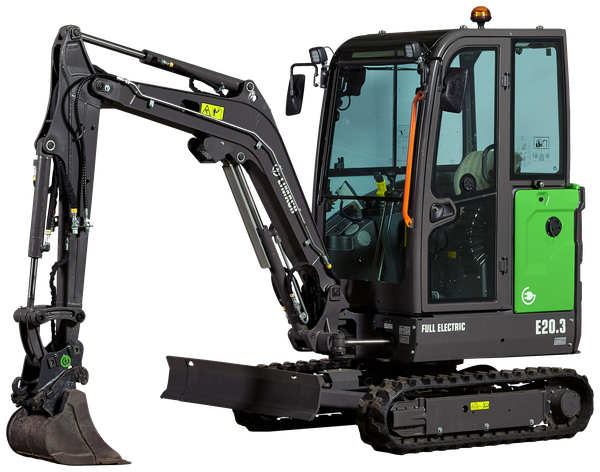
E20.3

Powerful & Productive

The E20.3 machine is an electric mini excavator with an operating weight of 2.050 kg. Combined with the heavier hydraulic pump, stronger boom construction, and extended undercarriage, this machine is slightly more powerful than the E18. This model is available both with and without a cabin (canopy).

More information

E25.4

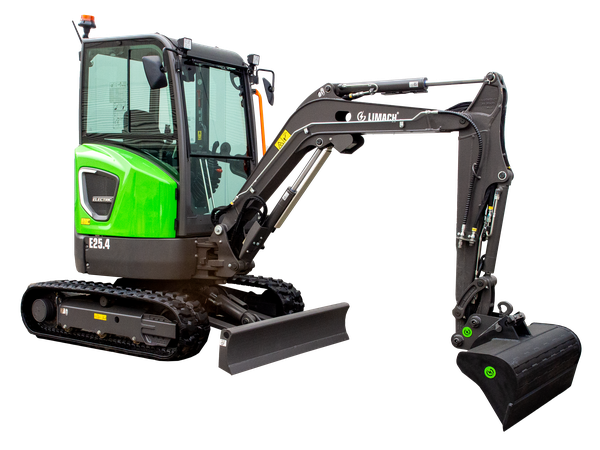
E25.4

Powerful & Efficient

The 2.5-ton green all-rounder of electric excavators! Powerful, compact, and versatile – the E25.4 is the machine that can do it all. A short swing radius excavator, perfect for working in confined spaces.

More information

Limach_27.1_05_21_transparant_kl

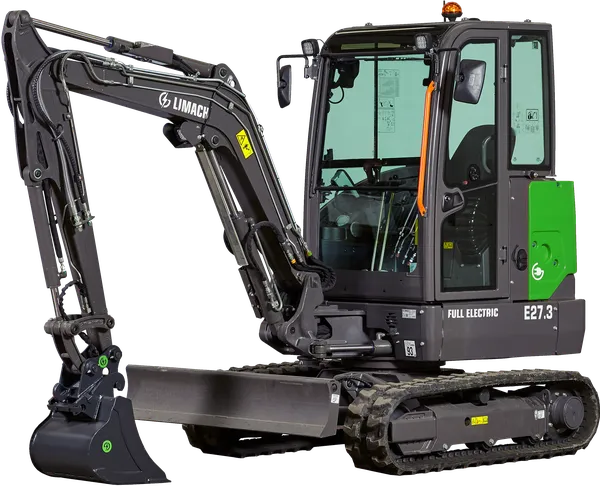
E27.3

Productive & Efficient

With an weight of 2.990kg, the E27.3 is compact and stable. The battery pack has a capacity of 30 – 50 kWh and comes with an onboard 9.9 kWh charger at 400 V. This machine is the emission-free solution for sustainable projects.

More information